
From Component Requirement to Finished Tool
Satya Moulds develops tooling around the component, production requirement and intended application.
Why Design Matters
Successful tooling starts before machining begins.
Design decisions influence the geometry, construction, machining sequence and eventual production performance of the mould or die.
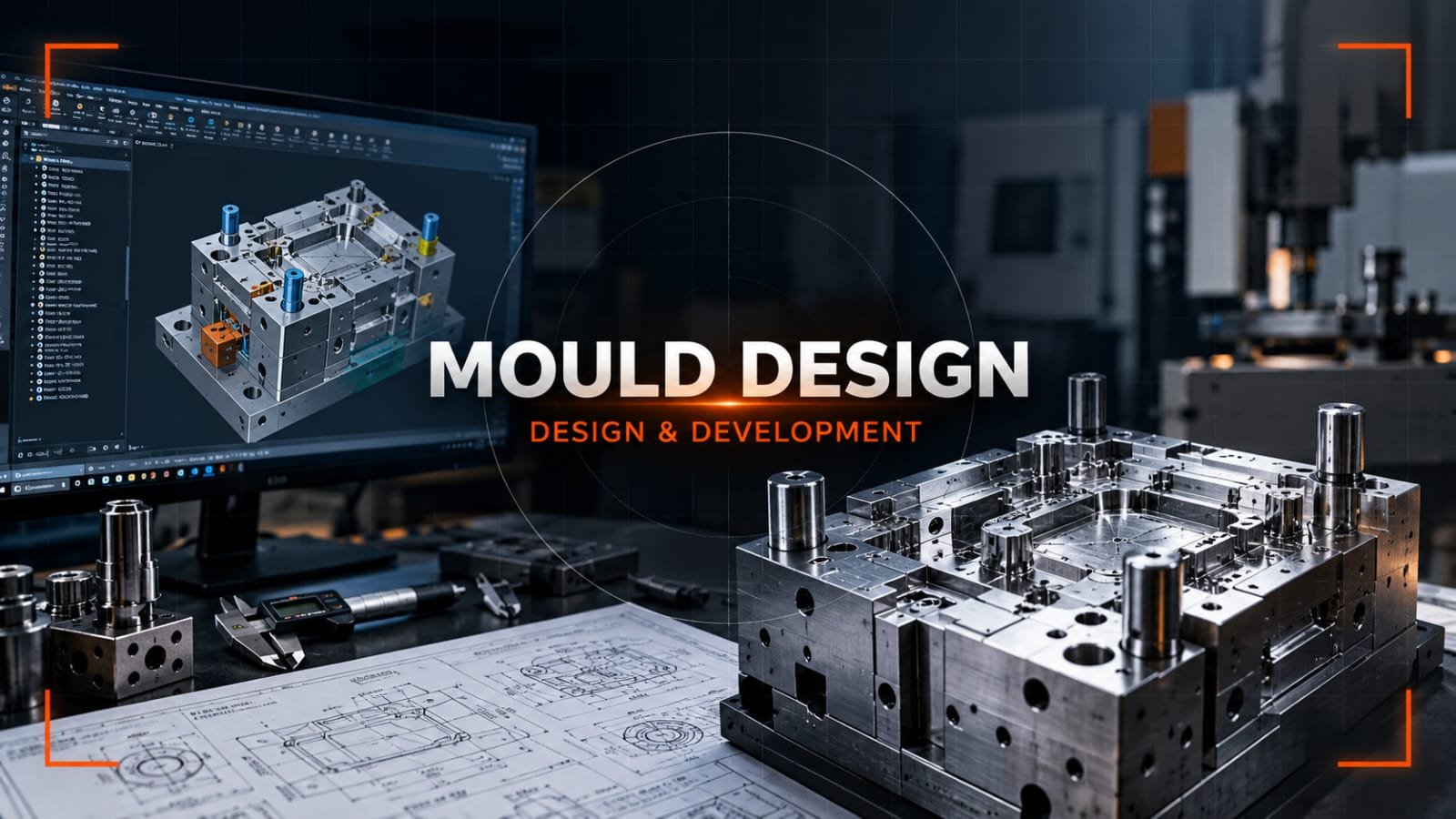
Our Design & Development Scope
Tooling categories covered by our design and development work.
- Injection Mould Design & Development
- Rubber Mould Design & Development
- HPDC / Pressure Die Casting Dies
- Multi-Cavity High-Precision Moulds & Dies
- Precision Mould and Die Spare Parts
- Customer-Specific Tooling
How a Tooling Project Moves
The stages a mould or die passes through at Satya Moulds.
Requirement review
We study the component drawing, CAD data or sample together with the production requirement and intended application.
Design and development
The mould or die is designed around the component geometry, construction and the machining sequence it will need.
Precision machining
Cores, cavities and tooling components are machined on VMCs, CNC turning, EDM, Wirecut and grinding machines in-house.
Inspection and finishing
Components are checked on the Vision Measuring Machine and dimensional instruments before assembly and finishing.
Delivery and support
The finished tool is delivered, with modifications and spare parts supported from the same setup.
Engineering + Manufacturing
Design and development are supported by an in-house manufacturing setup that includes VMCs, CNC turning, EDM, Wirecut, grinding and inspection equipment.
This allows Satya Moulds to work as a tooling development and manufacturing partner rather than simply a machining facility.
Start a Mould Development Discussion
Bring us the component and the production it needs to support. We will work through the tooling with you.